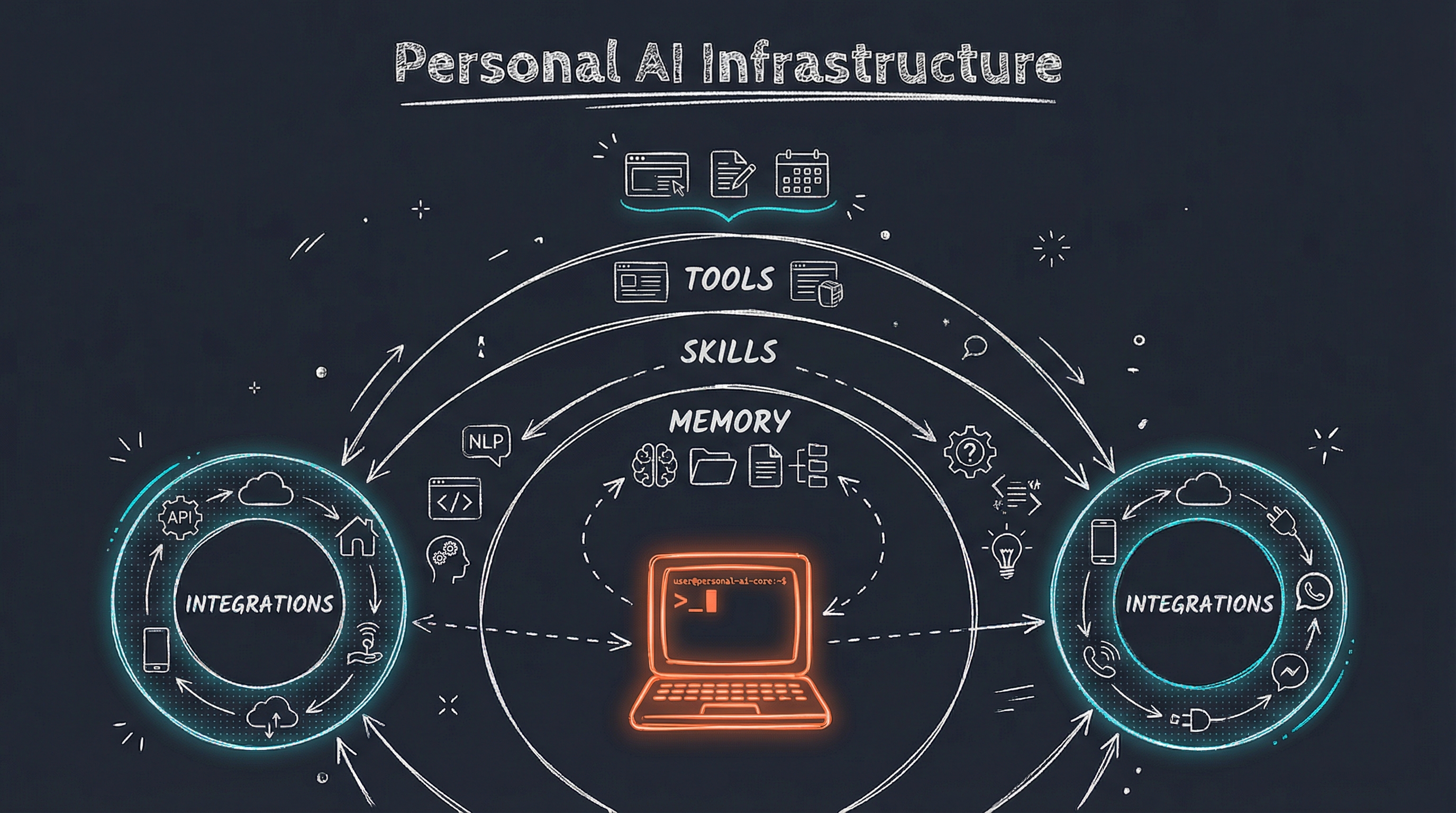
I’ve been building what I call Personal AI Infrastructure (PAI) for a few months now. This blog is where I’ll document the journey.
The Problem
AI tools are everywhere. ChatGPT, Claude, Copilot - they’re useful, but they don’t know me. Every conversation starts from scratch. Context gets lost. Work gets repeated.
I wanted something different. An AI system that:
- Remembers past conversations and decisions
- Understands my projects, preferences, and constraints
- Runs locally when I need it to
- Integrates with my actual workflow
The Approach
I’m building on Claude Code as the foundation. Not because it’s perfect, but because:
- It runs in my terminal - where I already live
- It has tool access - can read files, run commands, search the web
- It’s extensible - I can add custom skills and hooks
The core idea is simple: wrap the AI with context that makes it useful to me specifically.
What I’ve Built So Far
Custom Skills: Reusable prompts for tasks I do repeatedly. Writing emails, reviewing code, planning projects. Each skill knows how I like things done.
Episodic Memory: A system that indexes past conversations. When I ask about something, PAI can search what we’ve discussed before.
Tool Integration: Connections to my calendar, email, file systems. The AI can actually do things, not just suggest them.
What’s Next
This is a work in progress. Some things work great. Others are experiments that might fail. I’ll share both.
The goal isn’t to build the perfect AI system. It’s to build one that actually helps me get things done.
If you’re interested in this kind of thing, follow along. I’ll post updates as I learn.
Interested in building your own Personal AI Infrastructure? I help individuals and organizations design AI systems that actually fit how they work. Get in touch if you’d like to explore what’s possible.