I have a demanding career. I manage customer experience analytics at Agilent Technologies. I teach at two universities. And I’m deeply involved in AI infrastructure development.
But none of that matters if I’m not present for my family.
My wife Tiffany and I have two daughters - Ellie (9) and Tessa (5). Between dance classes, swim lessons, gymnastics, and the endless logistics of family life, staying organized is a challenge. Staying present is harder.
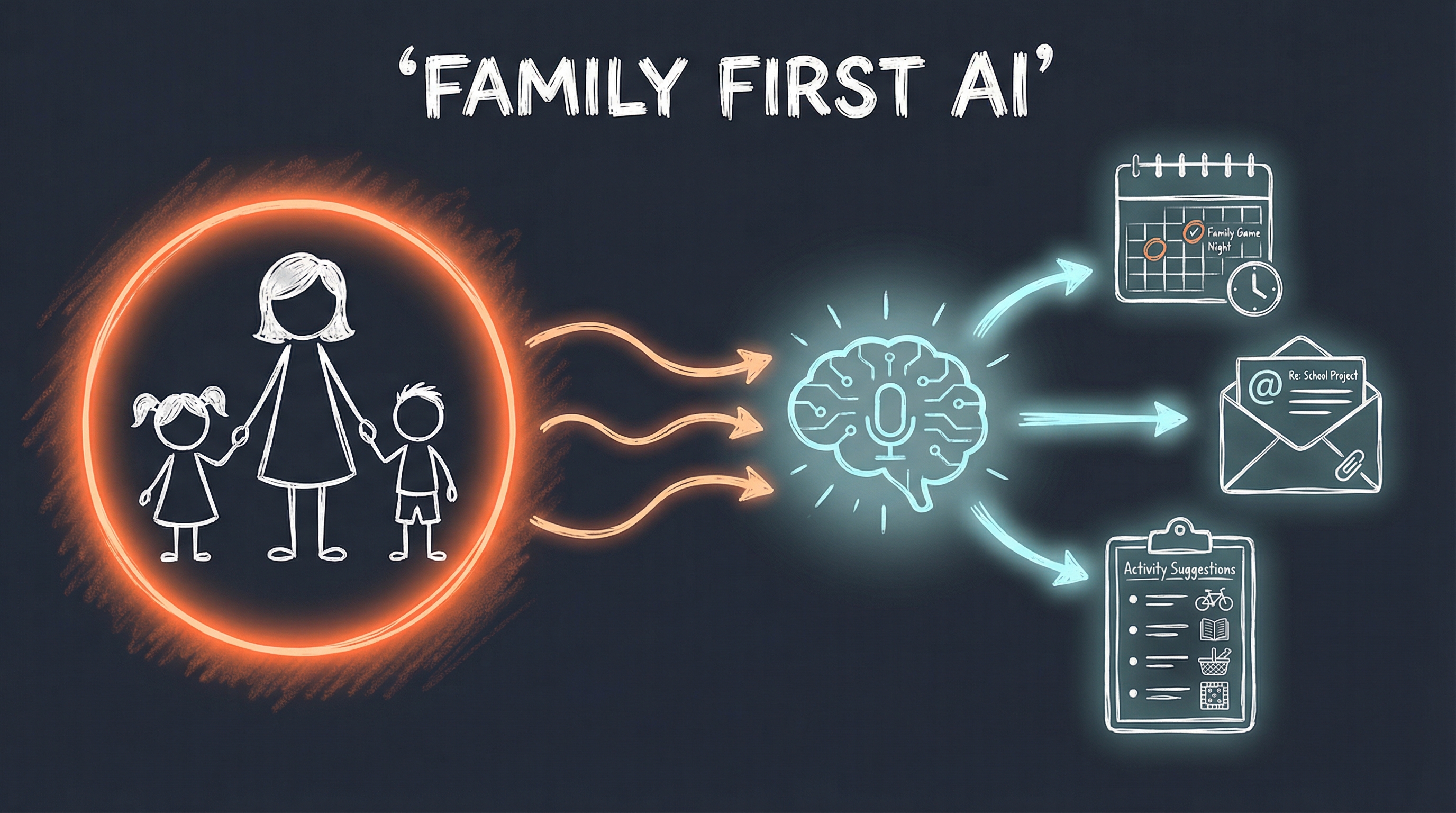
So I built a Family skill into my Personal AI Infrastructure. Because if AI can help me with work, it should help me with what actually matters.
The Family Skill
In PAI terminology, a “skill” is a specialized capability with its own context, workflows, and integrations. The Family skill knows:
- Our daughters’ ages, interests, and activity preferences
- Iowa City area destinations we love (and ones to avoid)
- Age-appropriate activity filters (both kids need to be able to participate)
- Our schedule constraints and best windows for family time
- Seasonal activity options and family traditions
When I ask “what should we do this weekend?”, the AI doesn’t just search the internet. It filters through our family’s actual preferences and constraints.
Integration with Outlook: The Family Calendar
Here’s where it gets practical.
Tiffany and I share a family calendar in Outlook. Dance recitals, swim lessons, birthday parties, school events - it all lives there. Through my Outlook MCP integration, my AI has read access to this calendar.
This means when I’m planning, the AI knows:
- What’s already scheduled
- When we have free windows
- Upcoming events we might need to prepare for
It’s not just aware of my work calendar. It’s aware of our life.
The New Year’s Eve Email
This actually happened yesterday.
Tiffany and I hadn’t planned anything for New Year’s Eve. The girls were excited, we wanted to do something special, but between the holidays and work, we hadn’t figured it out.
So I typed:
“Send Tiffany an email with options to do for NYE tomorrow”
Here’s what my AI did:
- Understood the context - New Year’s Eve, family activity, Iowa City area
- Applied the filters - Age-appropriate for a 9-year-old and 5-year-old, something both could enjoy
- Researched options - Local events, family-friendly celebrations, activity ideas
- Drafted in my voice - Starting with “Hey babe, …” because that’s how I write to my wife
- Created the draft in Outlook - Ready for my review before sending
The email included several options with details about timing, pricing, and why each might work for our family. All I had to do was review it, make a small tweak, and send.
Tiffany had just joked with a client of hers that it was only a matter of time before she’d be communicating with my AI agent. When that email landed in her inbox - researched, organized, and written in my voice - she laughed. “Well, that happened faster than I expected.”
Why This Matters
The point isn’t that AI wrote an email. The point is what that email represented:
Time recovered. Researching family activities, comparing options, writing it up - that’s 30-45 minutes I would have spent. Instead, I spent 2 minutes reviewing and sent it while walking between meetings.
Mental load shared. The cognitive overhead of “we should figure out NYE” had been sitting in the back of my mind. The AI took that off my plate.
Presence preserved. That 30-45 minutes I saved? I spent it actually with my family instead of planning for my family.
The Skill in Practice
Activity Planning
The Family skill has workflows for different scenarios:
Weekend Activities:
User: "What should we do this weekend? Weather looks nice."
→ Checks weather forecast
→ Filters for outdoor activities appropriate for both ages
→ Suggests 3-4 options with logistics
Trip Planning:
User: "Plan a long weekend trip somewhere within 4 hours"
→ Researches family-friendly destinations
→ Considers kid ages for activities
→ Provides itinerary with hotel recommendations
Special Events:
User: "Need to plan Ellie's birthday party"
→ Checks her current interests
→ Researches venue options in Iowa City
→ Creates party plan with timeline and guest list template
Integration with Other Skills
The Family skill doesn’t operate in isolation:
Outlook Skill: Calendar awareness, email drafting, meeting scheduling around family time
Research Skill: Deep research on destinations, activities, and local options
Gift Research: Uses the FamilyInterests reference to research gifts for birthdays and holidays
Iowa City Context
We live in Iowa City, Iowa. The skill knows our local landscape:
| Category | Examples |
|---|---|
| Outdoor | Hickory Hill Park, Terry Trueblood, City Park |
| Indoor | Iowa Children’s Museum, UI Natural History Museum |
| Day Trips | Amana Colonies, Adventureland, Blank Park Zoo |
| Seasonal | Farmers Market (summer), ice skating (winter) |
When suggesting activities, it prioritizes places we’ve enjoyed and filters by what makes sense for our family’s constraints.
The Philosophy
I’m building AI infrastructure because I’m worried about obsolescence. I want to stay ahead of the curve, be valuable in an AI-augmented world, and provide for my family.
But the irony would be building AI systems that consume so much time that I miss the family I’m trying to provide for.
The Family skill is a reminder of priorities. It’s not the most technically sophisticated thing I’ve built. But it might be the most important.
Design Principles
A few things I’ve learned building family-focused AI:
1. Context beats capability. A simpler AI that knows your family is more useful than a powerful AI that doesn’t.
2. Voice matters. The AI drafts emails in my voice - casual, warm, starting with “Hey babe” for my wife. It’s not generic AI-speak.
3. Review is non-negotiable. Every email goes to drafts first. I review before sending. Family communication is too important for automation without oversight.
4. Both kids included. Activity suggestions have to work for a 9-year-old AND a 5-year-old. That’s a real constraint the AI respects.
5. Flexibility preserved. The best family days allow for spontaneity. The AI suggests options; it doesn’t lock us into rigid plans.
What’s Next
The Family skill is evolving:
Better preference learning. As we do activities, capturing what worked and what didn’t to improve future suggestions.
Proactive reminders. “Ellie’s birthday is in 4 weeks - want to start planning the party?”
Shared access for Tiffany. Eventually, she should be able to ask the same questions and get the same family-aware responses.
Photo organization integration. Connect to our photo library to remember past family moments and suggest “remember when we did X? The girls loved it.”
Technology should serve life, not consume it. The Family skill is my attempt to use AI for what actually matters.
It researches so I don’t have to. It drafts so I can review quickly. It remembers so I don’t forget.
And when my wife gets an email that starts “Hey babe, here are some ideas for New Year’s Eve…” - even if my AI helped write it - the intention is mine. The love is mine. The presence I get back is mine.
That’s the point.